

I’m Bullish On Hypernormalization...
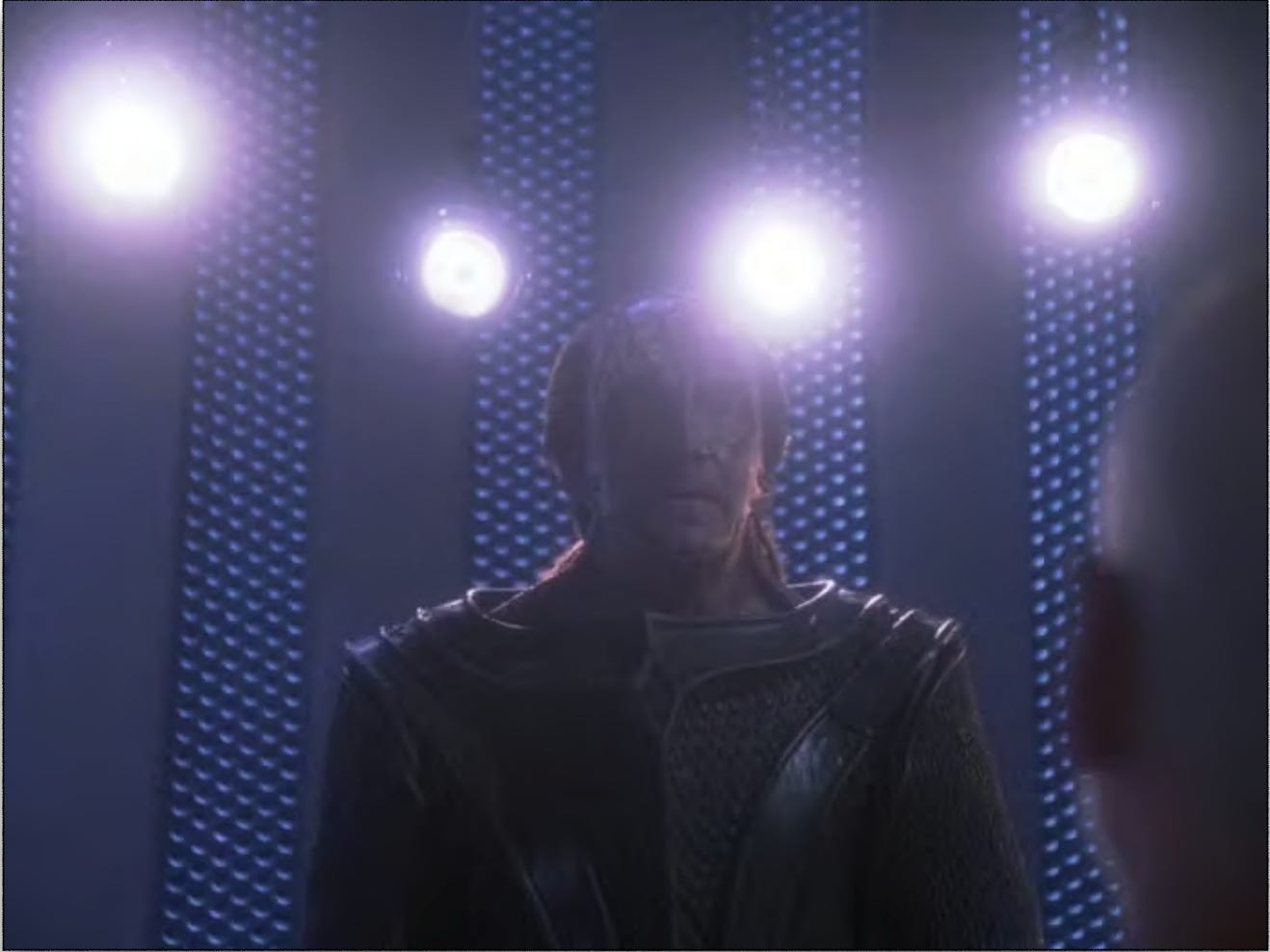
(There are four lights).

It’s been awhile since I mentioned “hypernormalization” here; for the newer readers who may be unfamiliar with the term, I’ll explain what that means.
It was coined by the Russian writer Alexei Yurchak in his 2005 book “Everything Was Forever, Until It Was No More: The Last Soviet Generation”. It’s a dense, tough read, but the term was later picked up in 2016 by the UK filmmaker Adam Curtis in his documentary by that name (currently available in its entirety on YouTube here).
“Politicians, financiers and techno-utopians, rather than face up to the real complexities of the world, retreated. Instead, they constructed a simpler version of the world, in order to hang on to power. And as this fake world grew, all of us went along with it. Because the simplicity was reassuring.”
Curtis’ interpretation of hypernormality differs from Yurchak’s in that the former asserts we all went along with it out of convenience (which I dispute, tbh), whereas the Soviet system was imposed on the entire population through generations of brutal repression.
I think here in the West, hypernormality is an outcome of institutionalized conditioning (propaganda) borne on the exigencies of an unsustainable monetary base and perverse incentives. Nobody goes along with it as much as they are roped into it, mostly unconscious of the process.
In the closing days of the Soviet Empire, state communism had run its course to the point where all reality-based signalling had been negated. Because everything had become subject to the diktats of party ideology, it was impossible to know, or certainly express the truth about anything, because doing so carried the real risk of running afoul of The State.
It was an untenable position for all involved, and it was also an intractable problem; the only course of action was for everybody to outwardly feign belief and fealty to various constructs which were by turns impossible, blatantly false or just plain absurd.
The proletariat joke summed it all up aptly:
“We pretend to work, and they pretend to pay us”.
When the centrally-planners set nail production in a factory based on quantity, the workers simply adjusted the line to produce tiny nails in the prescribed amount.
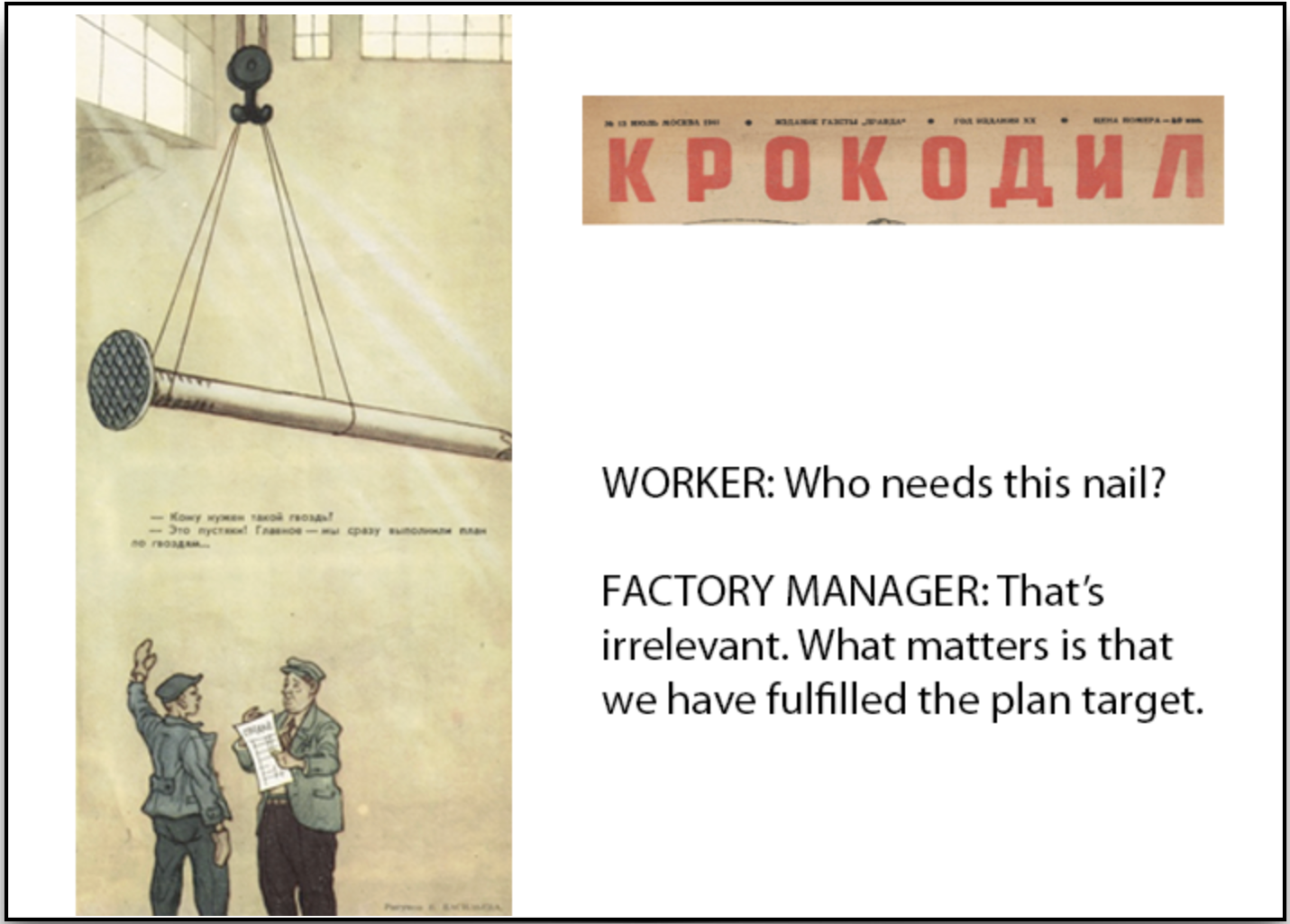
After the planners attempted to thwart the scheme by switching to quotas based on weights, the shop floor adjusted again: rolling one, gigantic nail off the line that met the quota for the day, and then going home.
The story is possibly apocryphal, arising from an analysis of Goodhart’s Law (“When a measure becomes a target, it becomes useless” - I also once wrote about this as it related to those endless customer satisfaction surveys we’re all subjected to).
I’ve previously mangled a Voltaire quote to say that “hypernormalization is the art and science of making the masses believe absurdities”1
In a fully hypernormalized world, media personalities look at the camera with a straight face and declare that the surge in turbo cancers and infertility since the COVID vax roll-out could be caused by anything other than the vaccines: climate change, video games,white supremacy, you name it. We don’t know it was the vaccines, and we never will, because political and ideological imperatives prohibit the question.
When the inflation ignited by the COVID stimulus became too persistent and pronounced to ignore, it was ascribed to grocery store CEOs and corporate avarice (“greedflation”), then later, Trump Tariffs.
Within the last year, we’ve seen horrific mass shootings and at least one high-profile assassination (Charlie Kirk) carried out by people who have transitioned their gender, recently culminating in the Tumbler Ridge shooting in BC, Canada’s worst murder spree in over 40 years (since Marc Lepine killed 14 women on the campus of L’École Polytechnique, in Montreal in 1989).
